


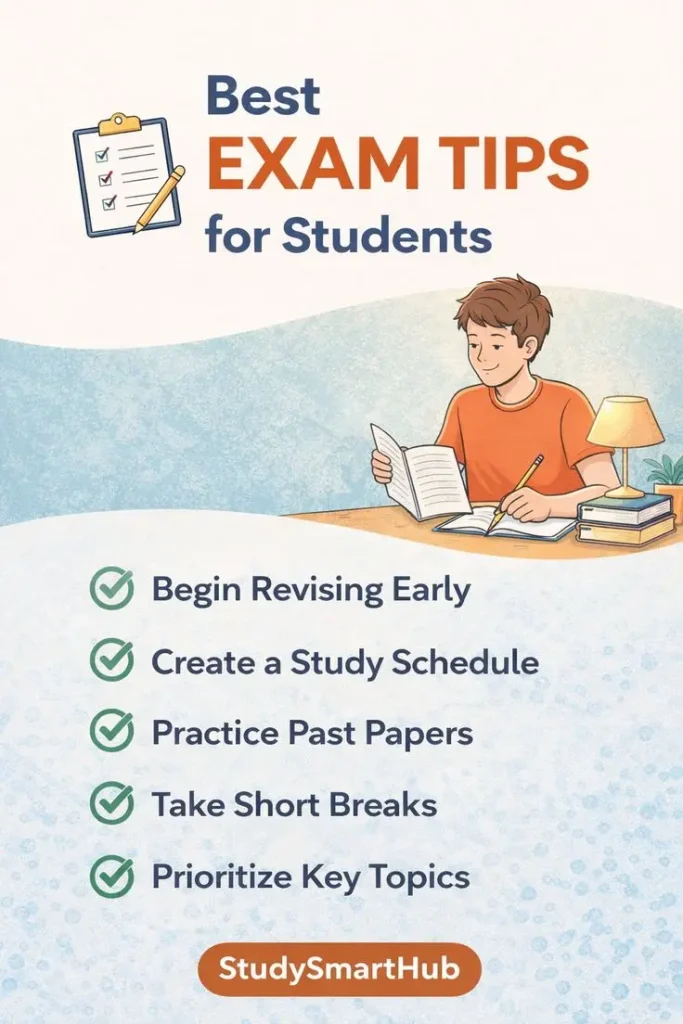
Every student knows the feeling of opening a textbook two days before an exam and wondering where to begin. The truth is that good results rarely come from last-minute panic; they come from a steady, well-organised approach in the weeks before the test. The exam preparation tips in this guide are not about studying longer hours. They are about studying in a way that matches how memory actually works, so the effort you put in stays with you when it matters most.
Start With a Realistic Revision Timetable
The single most effective change most students can make is to start earlier and spread the work out. Psychologists call this the spacing effect: information reviewed in shorter sessions over many days is remembered far better than the same information crammed into one long night. Build a timetable that begins three to four weeks before your first paper. List every subject, break each subject into topics, and assign topics to specific days. Keep sessions to forty or fifty minutes with short breaks, and be honest about the hours you truly have available after school, work, or family commitments. A plan you can actually follow beats an ambitious plan you abandon by day three.
Study Actively, Not Passively
Reading notes and highlighting paragraphs feels productive, but research consistently shows these are among the weakest study methods. Active techniques work much better. After reading a topic, close the book and write down everything you remember; the effort of recall strengthens the memory itself. Turn headings into questions and answer them aloud. Teach the material to a friend, a sibling, or even an imaginary class — explaining a concept exposes gaps that silent reading hides. Mix topics within a session rather than blocking one subject for hours, because switching forces your brain to decide which method applies, exactly the skill exams test.
Practise With Past Papers Under Exam Conditions
Past papers are the closest thing to a rehearsal for the real event. Use them in two stages. Early in your revision, work through questions open-book to learn what the examiners expect and how marks are awarded. In the final two weeks, sit full papers in timed conditions: no phone, no pauses, no checking answers midway. Mark your work honestly against the official scheme and keep a list of every mistake. Those mistakes are gold — they show you precisely which topics deserve your remaining time. Many students discover that a handful of recurring errors, once fixed, lift their grade more than re-reading an entire textbook would.
Use Trusted Guides and Check Information Carefully
Students increasingly revise with help from the internet, where quality varies enormously. Prefer sources that show their working: detailed walkthroughs, worked examples, and material written by teachers or official exam bodies. The same careful attitude applies whenever you follow online instructions of any kind. Step-by-step resources such as installation and account verification guides show how a good guide should be structured — clear steps, in order, with nothing skipped. When a revision page skips steps or makes promises that sound too good to be true, treat it with suspicion and cross-check it against your textbook.
Look After Sleep, Food, and Movement
Your brain consolidates memories during sleep, which makes the all-night study session one of the worst exam strategies there is. Aim for eight hours in the nights before an exam, and keep a regular sleep schedule during the whole revision period. Eat proper meals with a mix of protein, whole grains, fruit, and vegetables, and drink water regularly — dehydration alone can dull concentration. Short walks or light exercise between sessions genuinely help: even twenty minutes of movement improves blood flow to the brain and clears the mental fog that builds up after hours at a desk.
Manage Stress Before It Manages You
Some nerves are normal and even useful, but anxiety becomes a problem when it stops you sleeping or makes your mind go blank. Prepare practically: visit the exam venue in advance if you can, pack your bag the night before, and arrive early so nothing feels rushed. During the paper, if panic rises, pause, breathe slowly for thirty seconds, and move to a question you can answer — momentum rebuilds confidence. Remember that one exam is a snapshot, not a verdict on your ability. Students who build steady habits, ask teachers for help early, and use structured resources — including guides that compare features, benefits, pricing and safety when evaluating any online service — tend to make calmer decisions under pressure in every area of life.
Build a Support System Around Your Revision
No student revises in a vacuum, and the students who cope best usually have quiet systems of support working behind them. Tell your family what your exam schedule looks like and ask for what you actually need — a quiet room at certain hours, meals at regular times, a lift to the exam centre. Study partners help when chosen carefully: a small group that quizzes each other and shares summaries divides the labour and keeps motivation alive on flat days, while a group that mostly chats will quietly consume your timetable. Teachers are a support system too, and an underused one. Most will happily look at a practice essay, explain a stubborn topic after class, or tell you honestly which topics the exam board loves. Asking early, weeks before the paper, is what separates students who get help from students who run out of time to use it. Finally, look after the basics of morale: keep one evening a week genuinely free, stay in touch with friends, and remember that rest is part of the method, not a reward for finishing it.
The Final Week: Taper and Consolidate
In the last few days, shift from learning new material to consolidating what you know. Revisit your mistake list, re-read your one-page summaries, and do one final timed paper. Reduce study hours slightly the day before the exam and spend the evening relaxing. On the morning itself, eat breakfast, skim your summary notes once, and then put them away. Walk in knowing that preparation is a process you have already completed — the exam is simply where you show it.


