Introduction
Graduation is an exciting milestone, but it also brings confusion, pressure, and many unanswered questions. Students often feel proud and nervous at the same time. Friends move in different directions, family expectations grow, and the job market feels overwhelming. In this situation, career guidance after graduation becomes a valuable support system that helps young adults move forward with clarity.
Many graduates struggle to decide whether they should look for a job, pursue higher studies, start a business, or take time to build skills. Social media success stories can increase self doubt and create unrealistic timelines. Without proper direction, people may choose paths based on fear, trends, or external pressure instead of personal strengths and interests.v
This article is designed to simplify that journey. It explains how thoughtful planning can turn confusion into confidence. You will learn how to explore options, assess yourself honestly, and take practical steps toward a meaningful career. The focus is on real life decisions, not quick fixes or empty promises.
Whether you have a clear goal or feel completely lost, this guide will help you think clearly and act wisely. By the end, you will understand how to make informed choices that align with your skills, values, and long term goals. It encourages patience, self trust, and steady progress instead of rushed decisions during early careers.
What is Career Guidance After Graduation?
Career guidance after graduation refers to structured support that helps graduates choose suitable career paths based on skills, interests, and market realities. It involves understanding personal strengths, exploring industries, and learning about roles, qualifications, and growth opportunities. This guidance can come from mentors, counselors, educators, or self guided tools.
The process is not about forcing one fixed decision. Instead, it encourages exploration and informed thinking. Graduates learn how to connect education with practical work options. They also understand how additional certifications, internships, or short courses can improve employability.
Effective guidance combines self assessment with external research. A student may enjoy creativity but also value stability. Through guidance, they can explore careers that balance both needs. This approach reduces confusion and increases confidence.
In simple terms, it is a roadmap for the early professional journey. It helps individuals move from academic life to the working world with awareness, preparation, and realistic expectations.
This support often includes career assessments, goal setting exercises, resume planning, interview preparation, and long term planning discussions. When done properly, it respects personal values and changing interests while staying practical and flexible. It adapts to different backgrounds, economic conditions, and individual learning speeds over time for diverse graduates worldwide today everywhere now.
Why is Career Guidance After Graduation Important?
Choosing a career without direction can lead to frustration, wasted time, and financial stress. After graduation, decisions carry long term impact. The wrong choice may result in job dissatisfaction or frequent career changes. Proper guidance helps graduates avoid these problems.
The modern job market is highly competitive and constantly changing. New roles appear while others disappear. Guidance helps students understand current trends without chasing every trend blindly. It teaches them how to evaluate opportunities realistically.
Another reason this guidance matters is mental well being. Uncertainty after graduation often causes anxiety and self doubt. Having a clear plan reduces stress and builds confidence. Graduates feel more in control of their future.
Career guidance also supports better use of education. Many students are unsure how their degree fits into real work. Guidance bridges this gap by showing practical applications of academic knowledge. It helps individuals see value in their learning.
Overall, this process creates clarity, focus, and direction. It empowers graduates to make decisions based on awareness rather than pressure or comparison. It encourages responsibility, realistic goal setting, and gradual growth, which are essential during the early stages of professional life for long term stability, satisfaction, learning, adaptability, and sustainable success over time ahead always.
Detailed Step by Step Guide
This guide breaks the career planning process into clear, manageable steps. Each step builds awareness and confidence. You do not need to complete everything at once. Progress happens gradually through reflection and action. By following these steps, graduates can reduce confusion and make thoughtful choices. The approach remains flexible because interests and circumstances change. The goal is not perfection, but steady movement toward suitable opportunities. It suits different backgrounds, academic streams, and personal timelines without creating unnecessary pressure or comparison among peers, friends, family, and society expectations today overall globally.
Step 1: Self Assessment
Self assessment is the foundation of any strong career decision. Start by listing your interests, strengths, and weaknesses honestly. Think about subjects you enjoyed, tasks you performed well, and activities that energize you. Personality traits, work style preferences, and values also matter.
Simple exercises like journaling or rating skills can provide clarity. For example, someone who enjoys problem solving and teamwork may thrive in analytical or collaborative roles. Avoid copying others during this stage. Focus on understanding yourself before exploring options. This step builds self awareness, which guides every later decision.
Online assessments and feedback from trusted mentors can support this process, but your own reflection should remain the priority throughout the early stages of planning, decision making, growth, learning, and personal development after graduation and beyond life transitions ahead now always calmly thoughtfully slowly intentionally.
Step 2: Explore Career Options
After understanding yourself, explore possible career options. Research industries related to your field of study and beyond. Look at job roles, required skills, growth paths, and work environments. Use job descriptions to understand daily responsibilities.
Talk to professionals, seniors, or alumni to gain real world insight. Informational conversations often reveal truths not found in advertisements. Keep an open mind while researching. Some roles may surprise you.
During this stage, career guidance after graduation helps connect self assessment results with real opportunities. Create a short list of options that match your interests and abilities. This list will guide your next steps.
Use spreadsheets or notes to compare options based on salary expectations, location, work culture, learning potential, and stability. This organized approach reduces overwhelm, supports logical thinking, and prevents impulsive choices driven by pressure, fear, or trends alone today everywhere online constantly changing narratives around success.
Step 3: Build Relevant Skills
Skills bridge the gap between education and employment. Identify technical and soft skills required for your shortlisted roles. Technical skills may include software knowledge, data analysis, or design tools. Soft skills include communication, teamwork, and time management.
You can build skills through short courses, workshops, volunteering, or self practice. Consistency matters more than speed. Focus on practical application rather than certificates alone. Projects, assignments, or simulations improve confidence.
Set realistic learning goals and track progress weekly. Skill development increases employability and prepares you for real work challenges.
Choose learning methods that fit your schedule and style. For example, visual learners may prefer videos, while others learn better through practice and teaching peers. Remember to balance learning with rest, reflection, and application to avoid burnout and maintain motivation over long periods of growth and change gradually sustainably patiently always intentionally calmly focused daily weekly monthly cycles.
Step 4: Gain Practical Experience
Practical experience provides exposure to real work environments. Internships, part time jobs, freelancing, or volunteering build confidence and understanding. Even short experiences offer valuable lessons.
Experience helps test assumptions. A role that looks attractive on paper may feel different in practice. This insight saves time and prevents wrong decisions. Employers also value experience because it shows initiative and adaptability.
Document your experiences carefully. Reflect on what you learned, enjoyed, and disliked. These reflections refine future choices.
Students unsure about full commitments can start with micro internships or short projects to explore safely without long obligations. Such opportunities provide clarity, build networks, improve resumes, and increase confidence during early transitions from academic settings to professional spaces gradually over time with guidance, support, patience, learning, mistakes, feedback, reflection, growth, adjustment, resilience, courage, openness, curiosity, humility, and persistence.
Step 5: Make Informed Decisions
After research and experience, it is time to decide. Review your self assessment, options, and experiences together. Consider practical factors like income needs, location, and lifestyle preferences.
Avoid rushing due to comparison or pressure. Decision making improves with calm reflection. Choose a direction that feels reasonable and motivating. Remember, decisions are not permanent. Adjustments are possible as you grow.
Writing down reasons for your choice can strengthen commitment and provide reassurance during moments of doubt, especially when facing challenges, feedback, setbacks, uncertainty, and change in early career stages ahead today personally professionally emotionally mentally gradually.
Step 6: Create an Action Plan
An action plan turns decisions into results. Break goals into small, clear tasks with timelines. Examples include updating resumes, applying for roles, or enrolling in courses.
Track applications, follow up politely, and prepare for interviews. Stay organized and consistent. Review progress monthly and adjust plans when needed.
Career guidance after graduation supports this stage by providing accountability and encouragement. Structured plans keep motivation high and reduce procrastination.
Celebrate small wins, learn from rejections, and maintain balance to protect mental health throughout the process while staying flexible, patient, proactive, curious, realistic, hopeful, focused, disciplined, reflective, adaptable, resilient, confident, grounded, and consistent.
Benefits of Career Guidance After Graduation
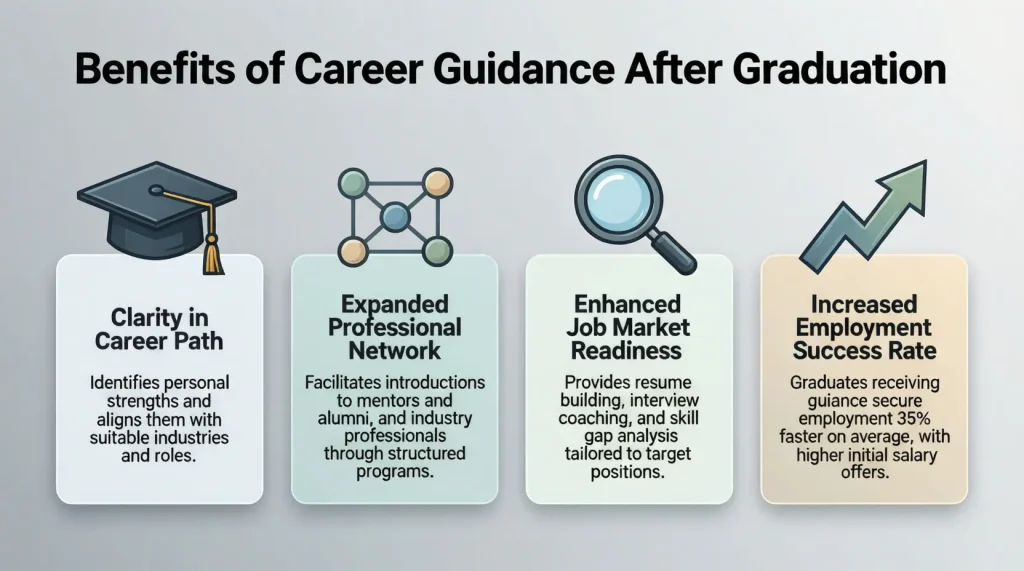
Career guidance offers practical and emotional advantages for graduates navigating uncertain transitions. It replaces guesswork with structured thinking and informed choices. With guidance, individuals feel supported rather than isolated. The benefits extend beyond immediate employment and influence long term satisfaction and stability. By focusing on strengths, learning, and planning, graduates create healthier relationships with work and success that support balance, purpose, motivation, growth, confidence, adaptability, and resilience across different industries, roles, environments, cultures, economies, and life stages ahead globally today.
- Clear direction and reduced confusion during early career stages.
- Better alignment between personal strengths and career choices.
- Improved confidence in decision making and planning.
- Smarter use of time, money, and educational resources.
- Awareness of multiple career paths instead of limited options.
- Reduced stress through realistic expectations and preparation.
- Increased employability through skill focused development.
Overall, these benefits help graduates feel prepared, realistic, and empowered while shaping careers that evolve with experience and changing goals over time, supporting confidence, clarity, stability, satisfaction, learning, adaptability, and responsible decision making throughout professional life journeys ahead today continuously.
Disadvantages and Risks
While guidance is helpful, it also has limitations and risks when misunderstood or poorly applied. Awareness of these issues helps graduates stay balanced and realistic during decision making, planning, learning, exploration, and transition phases after graduation, especially when emotions, expectations, and pressures run high and clarity feels limited temporarily for many individuals today globally often unexpectedly suddenly frequently repeatedly sometimes.
- Over dependence on external advice may reduce independent thinking and self trust during critical decisions and early career stages.
- Poor quality guidance can mislead graduates toward unsuitable paths based on outdated information or personal bias alone.
- Too many opinions may create confusion instead of clarity when boundaries are unclear and priorities shift often rapidly.
- Structured plans may feel restrictive for those who prefer spontaneous exploration and flexible learning styles over time.
- Guidance may not fully account for unexpected life events or changing economic conditions affecting opportunities, stability, priorities, and timelines suddenly.
- Cost and access barriers exist sometimes.
Common Mistakes to Avoid
Many graduates rush decisions immediately after finishing studies. Panic driven choices often lead to regret. Taking time to reflect prevents unnecessary changes and stress during early career stages, when emotions, expectations, and comparisons strongly influence thinking and behavior patterns without awareness or guidance initially for many individuals today globally widely.
Another mistake is ignoring personal interests in favor of trends. Chasing popular roles without self fit causes dissatisfaction. Trends change quickly, but strengths remain valuable over time, supporting long term growth, motivation, learning, confidence, stability, performance, satisfaction, adaptability, resilience, identity, purpose, direction, clarity, balance, health, well being, focus, energy, and commitment.
Some graduates skip skill development, expecting degrees alone to secure jobs. This assumption limits opportunities and confidence in competitive markets where employers seek practical abilities, adaptability, communication, problem solving, learning, and initiative alongside academic knowledge, experience, exposure, maturity, responsibility, professionalism, curiosity, discipline, resilience, ethics, awareness, and attitude.
Finally, avoiding feedback is a common error. Honest feedback highlights gaps and strengths. Ignoring it slows growth and learning unnecessarily during transitions, applications, interviews, projects, teamwork, internships, training, and early experiences where improvement matters most for progress, confidence, and success.
Frequently Asked Questions Section
Q1: When should graduates start career planning?
Graduates should begin planning during the final year of study or soon after completion. Early planning allows time for reflection, research, and skill building. It reduces panic and rushed decisions. Even informal thinking helps. Starting early does not mean fixing one path forever. It simply creates awareness and readiness for upcoming opportunities across different fields, markets, industries, roles, timelines, personal situations, responsibilities, interests, learning speeds, resources, backgrounds, expectations, cultures, economies, regions, networks, influences, changes, uncertainties, transitions, goals, priorities, realities.
Q2: Is professional counseling necessary for everyone?
Professional counseling can be helpful, but it is not mandatory for everyone. Some graduates benefit more from self reflection, mentors, or peer discussions. Counseling is useful when confusion feels overwhelming or decisions feel stuck. The key is honest exploration and informed thinking, regardless of the support source chosen based on comfort, access, affordability, trust, experience, availability, culture, background, learning style, personality, needs, goals, timing, context, urgency, complexity, confidence, clarity, readiness, openness, commitment, consistency, flexibility, patience, curiosity, motivation, balance, support.
Q3: What if I am still unsure after graduation?
Feeling unsure is normal and common. Uncertainty means you are thinking carefully. Focus on small experiments instead of final answers. Short courses, internships, or temporary roles provide insight. Each experience teaches something valuable. Over time, patterns appear. Patience and openness help clarity develop naturally through reflection, feedback, learning, mistakes, adjustment, exploration, guidance, conversations, reading, observation, practice, trial, error, persistence, consistency, curiosity, courage, honesty, self awareness, resilience, discipline, focus, energy, time, effort, intention, balance, trust, growth, change, maturity.
Q4: Can changing careers later cause problems?
Changing careers later is not a failure. Many professionals change directions successfully. Transferable skills support transitions. Challenges may include learning curves or temporary income changes. Planning reduces risks. Thoughtful transitions often lead to better alignment and satisfaction. Flexibility is valuable in modern work life where industries evolve, roles shift, technology advances, markets change, and personal priorities develop with experience, age, learning, responsibilities, health, family, values, interests, goals, context, environment, culture, economy, opportunities, networks, exposure, awareness, courage, planning, patience, support.
Q5: How do parents influence career decisions?
Parents often provide guidance, expectations, and emotional support. Their experience can be valuable. However, excessive pressure may create stress or conflict. Healthy communication balances respect and independence. Open discussions help align expectations with individual interests and abilities through listening, empathy, honesty, compromise, boundaries, patience, understanding, trust, encouragement, realistic advice, flexibility, awareness, cultural context, family values, financial realities, education, exposure, exploration, learning, growth, adjustment, maturity, confidence, clarity, balance, long term wellbeing, harmony, cooperation, collaboration, respect, support, dialogue, openness, consistency, love.
Q6: How long does it take to feel settled?
There is no fixed timeline. Feeling settled varies by person and situation. Some feel stable quickly, while others take years. Progress matters more than speed. Focus on learning, growth, and direction. Stability develops gradually through experience and reflection influenced by goals, expectations, resources, support, environment, health, mindset, opportunities, feedback, mistakes, adjustments, learning, confidence, patience, resilience, adaptability, curiosity, motivation, discipline, balance, values, priorities, context, economy, industry, role, culture, change, uncertainty, time, effort, persistence, reflection, growth, maturity, clarity, acceptance.
Expert Tips and Bonus Points
Experts recommend staying curious and flexible during early career stages. Avoid comparing your progress with others. Everyone moves at a different pace.
Keep learning even after securing a role. Industries change, and continuous learning protects relevance. Build professional relationships through genuine conversations. Networks grow naturally over time.
Maintain balance between ambition and wellbeing. Rest improves decision quality. Reflect regularly on goals and adjust plans calmly. Trust the process and stay consistent.
Bonus points include keeping records of achievements, seeking feedback regularly, practicing gratitude, managing finances wisely, and protecting mental health. Small habits create strong foundations. Staying organized, proactive, and honest with yourself supports sustainable growth and satisfaction over time across different roles, transitions, challenges, setbacks, opportunities, environments, cultures, industries, markets, goals, priorities, responsibilities, learning, reflection, adaptation, resilience, confidence, clarity, balance, purpose, direction, patience, consistency, effort, intention, awareness, discipline, focus, curiosity, courage, trust, progress, development, maturity.
Conclusion
Graduation marks both an ending and a beginning. The transition can feel uncertain, but thoughtful planning makes it manageable. Career guidance after graduation helps graduates slow down, reflect, and move forward with intention. It encourages self understanding, exploration, and realistic action.
This process is not about finding a perfect job immediately. It is about building clarity over time. By assessing yourself honestly, exploring options carefully, developing skills, and gaining experience, you create momentum. Small steps add up. Flexibility allows growth as interests and circumstances change.
Mistakes may happen, and that is normal. Each experience offers feedback. Learning from it builds resilience and confidence. Support from mentors, family, or peers can provide perspective, but personal ownership remains essential.
Remember that careers are journeys, not straight lines. Progress looks different for everyone. Comparing paths only creates unnecessary pressure. Focus on your own values, strengths, and goals.
With patience, consistency, and reflection, graduates can build meaningful and sustainable careers. The aim is not speed, but direction. Trust the process, stay curious, and continue learning. Over time, clarity strengthens, confidence grows, and opportunities align more naturally.
By staying honest with yourself and open to change, you protect long term satisfaction. Every step teaches something. Progress may feel slow, but consistency delivers results. Your career will evolve as you do, shaped by choices, effort, learning, and experience over time, through reflection, adjustment, resilience, curiosity, courage, patience, discipline, balance, trust, focus, growth, maturity, clarity, and purpose